
Outof stock


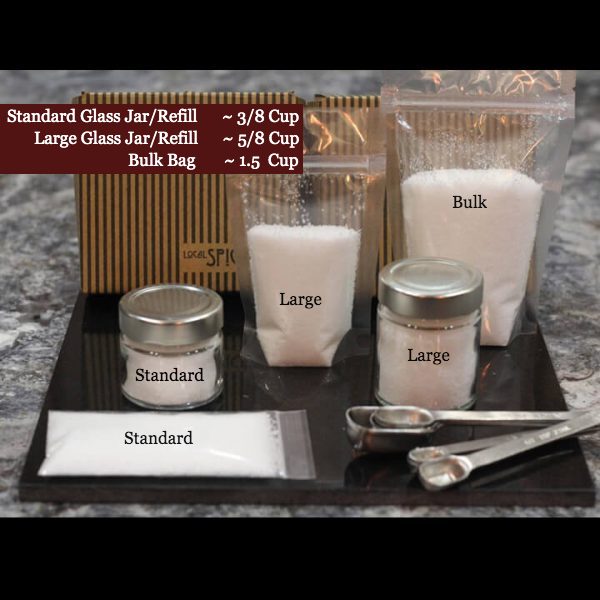


Sea Salt for Salt Mills
$6.25
Solar-evaporated natural salt, perfect for Salt Mills.
Related Products

Basil
$7.25 – $19.60A symbol of love in Italy, it’s said that a man with a sprig of basil in his hair announced his intentions to wed his love, and she announced her willingness with a pot of basil on her balcony.
A slightly peppery member of the mint family, Basil is pleasantly sweet backed with a bit of spice. Pair with tomato, add to pizza or use with egg dishes, fish, poultry, and salads. Basil is also the main ingredient in pesto.

Thyme
$8.00To ancient Greeks, Thyme symbolized style, elegance and courage. In the middle ages, ladies would embroider thyme leaves on the scarves of their knights to wear into battle. To the Roman, Pliny, it was a remedy for a myriad of disorders.
Use to season leg of lamb, French stews, Italian dishes, poultry stuffing, Manhattan clam chowder, and stocks. Try on fresh tomatoes, add a pinch to marinades, herb butters and cottage cheese (or put under your pillow to ward off bad dreams). [Thyme]

Berbere
$10.50This fiery spice blend is used in many Ethiopian dishes. Builds a powerful curry sauce and doubles as a rub on meats and vegetables. Great addition to a Bloody Mary, sweet potato and cob corn.
Hand blended in small batches with: Chiles, fenugreek, ginger, long pepper, cardamom, cinnamon, nigella, coriander, allspice, and clove.
Recommended Recipes:
Featured In:

Peppercorn, Green
$10.50Green Peppercorns are harvested before the berries ripen and form a hard seed. They are frequently rehydrated overnight in olive oil to deliver an acidic, pungent, tangy flavor, it which form they can be used as a substitute for capers. [Peppercorns (Green)]

Peppercorn, Kampot Black
$12.00Revered by French chefs for their jasmine-like aromatics, signature sweetness, and intense lingering heat. Kampot peppercorns are considered among many to be the best in the world.
▪ Grown in Kampot, Cambodia under a recognized appellation by the European Union & the United Nations, one of the most restrictive cooperatives in the world
▪ In the 1970s, the leadership of Cambodia had the pepper vines torn out by the roots. Farmers were instructed to focus on producing food for domestic consumption. With political change over the past 20 years, several farmers have brought the storied pepper fields back into production.
▪ To use the appellation “Kampot”, the product must be grown within the Kampot region, sampled annually, and farmed using organic growing methods
▪ Compared to our Vietnamese peppercorn, Kampot Pepper has a more lingering flavor and aroma, greater complexity, and signature jasmine aroma

Reviews
There are no reviews yet.